« CCIE info:asking about the CCIE written version2.0 | main | CCIE info 2 :asking about the CCIE written version2.0 »
February 05, 2005
CCIE study memo: Why do you need multicast?
Well, you do not really need to use multicast if you don't want to.
But-ah there are certain occasions that unicast won't be appropriate and multicast will be more suited for.
In what occasions will multicast be suited for?
An obvious example is an occasion where one server has to send the same data to a number of clients at the same time.
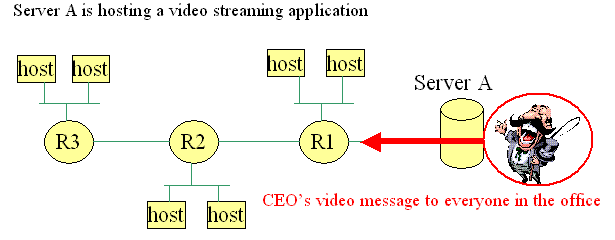
Let's say you have a server hosting a video-streaming application. The CEO of your company sends video messages to every one in the office. It's a pretty dumb example, I know. But it is only an example.
Now if you use uni-cast for this, you will need a separate data stream for each client PC like below.
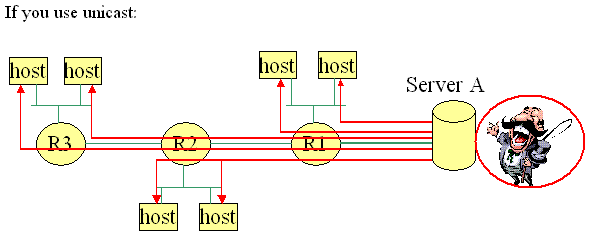
If this CEO's face happens to be rather large and requires 500 kbps of bandwidth for each stream, you will at least need:
500 kpbs x 6(clients) = 3000 kbps = 3 Mbps

Well, if there are only 6 employees in the company, this may not cause any big issues. But what if there are 1000 employees in the company?
500kbps x 1000 = 500000 = 500Mbps

You will need 500 Mbps of bandwidth on the link between R1 router and the server only to serve this application. This could cause problems on server's CPU or the bandwidth on the router. Obviously it will become a bottleneck of your network.
However, if you use Multicast for this purpose, you’ll only need to send one stream of data to the switch or the router no matter how many clients wish to receive the CEO’s message.

How could this possibly work?
Ah, there are several different technologies to make this work. I will talk about those when I am ready.
author aglogin : February 5, 2005 06:10 AM